
Hypothermia: Recognising It Before It’s Dangerous
Hypothermia in Australia does not need snow — wet, wind and 12°C will do it. The dangerous part is that judgement degrades before the person looks unwell.

21 articles
Hypothermia in Australia does not need snow — wet, wind and 12°C will do it. The dangerous part is that judgement degrades before the person looks unwell.

Heat exhaustion and heat stroke look similar and are treated completely differently. One sign separates them — and the cooling method with the best evidence is more aggressive than most peop…

Most navigation content is written for the Northern Hemisphere and is quietly wrong here. Here are handrails, catching features and pacing, plus how the sun and stars actually work in Austra…

Being findable is worth more than being self-sufficient. Here are the signals ranked by how far away they work, what search crews are actually scanning for, and the one purchase that ends th…

Most survival shelters fail because they are built upward. The heat you lose goes into the ground, and the fix is a thick bed of dry debris underneath you — before any roof exists.

Anyone can light a fire in the dry. The skill is the wet version — and it comes down to where dry fuel hides, building the platform up off the ground, and preparing far more tinder than feel…
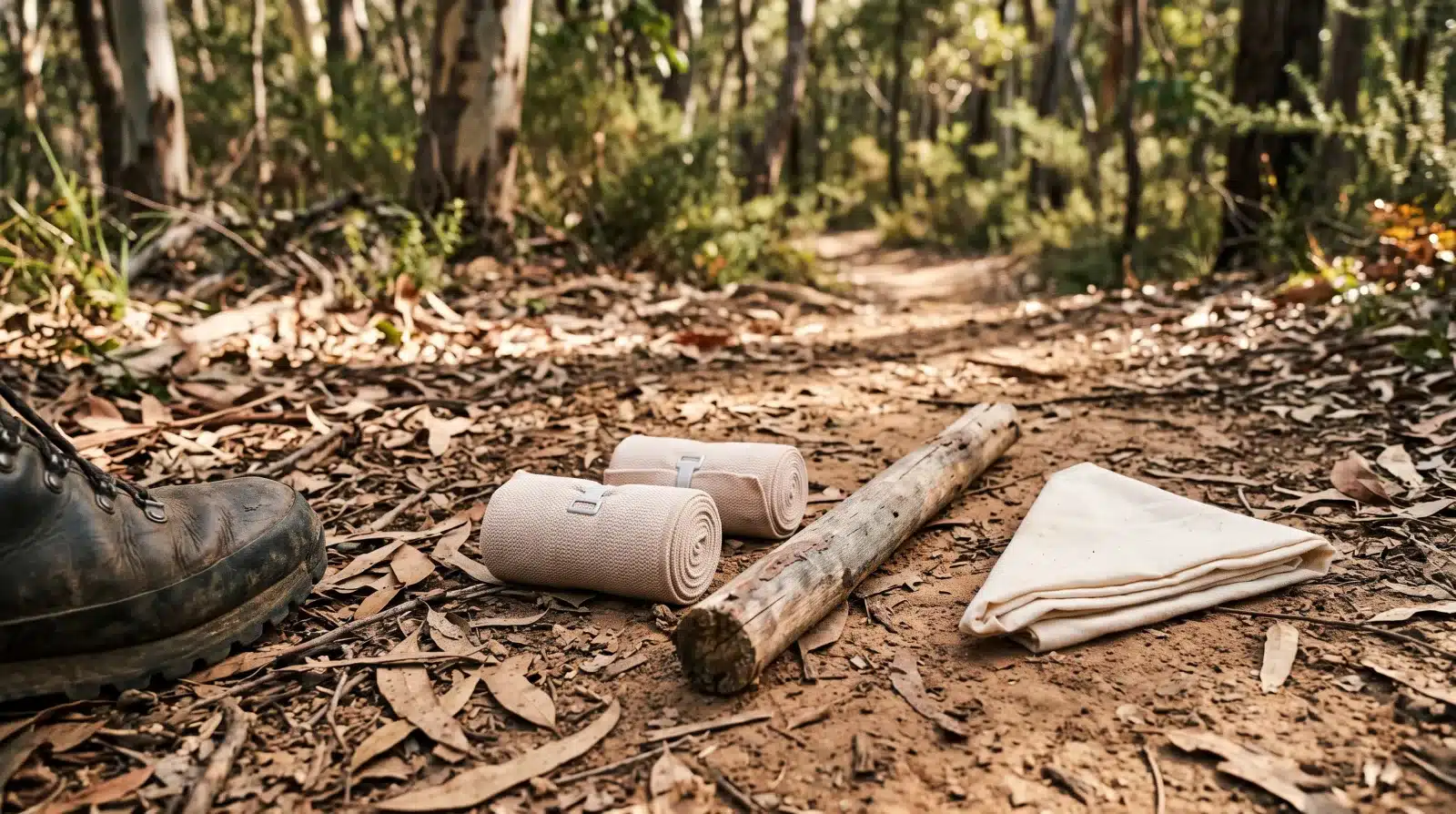
Australian snake bite first aid is one technique, done properly, and almost everyone gets a detail wrong. Here is the guideline sequence — width, direction, tightness, splint — and the four…

The instinct when lost is to keep walking. It is the wrong instinct: every kilometre you cover multiplies the area searchers have to cover. Here is what the first hour should actually look l…

Every purification method has a specific gap, and the gaps are what get people sick. Here is which method beats which pathogen, the boiling time that is actually required, and where the drin…